Description
Working Principle
The resistance value of an object depends on various factors, one of which is directly proportional to its length. For example, when the length of an object made of the same material is doubled while keeping the cross-sectional area constant, its resistance value will also double.
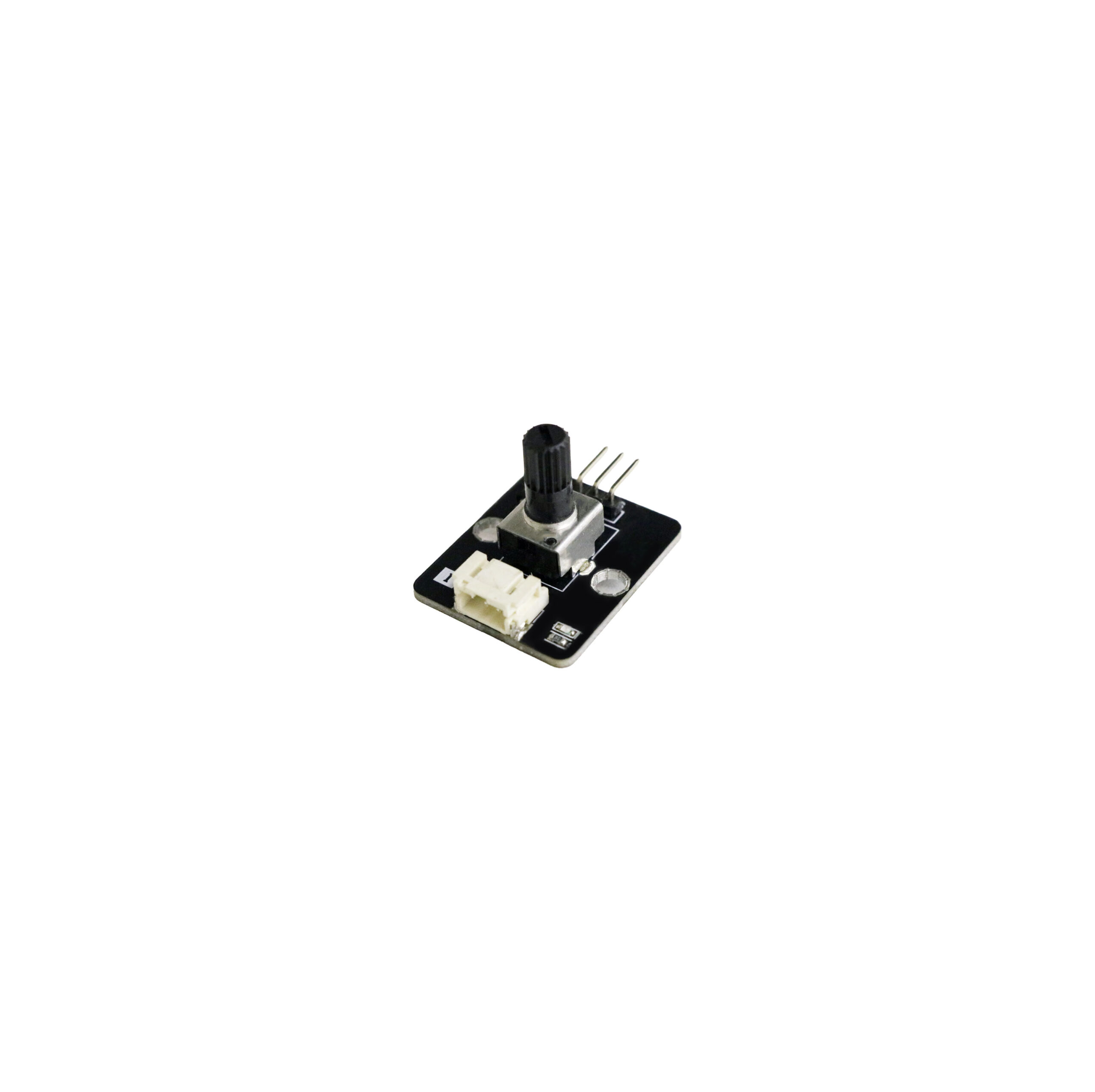
A potentiometer is a resistive element bent into a circular shape with a constant cross-sectional area. One end is connected to the output voltage ③, and the other end is grounded ①. There is a sliding terminal connected to the input voltage ② in the middle. Turning the knob allows the sliding terminal to move along the resistive element, changing the contact position between the two. When the sliding terminal is moved closer to ③, the length of the resistive element in the circuit decreases, thereby reducing the resistance value, which ultimately increases the output voltage. Conversely, when the sliding terminal is moved closer to ①, the resistance value increases, causing the output voltage to decrease.
Only logged in customers who have purchased this product may leave a review.




Reviews
There are no reviews yet.